

ORIGIN
THE ONE THAT STARTED IT ALL
If you had told the kid I used to be, the one growing up in his grandparents' house, the one with casts and surgery scars, the one whose family used food stamps and drove a beat-up VW Bug, that someday sneakers would take him farther than he knew a life could go, he wouldn't have believed you. Back then, life felt small. The world felt distant. Dreams didn't feel like something meant for people like me.
But sometimes the thing that changes your whole life doesn't show up with fireworks. Sometimes, it arrives quietly, sitting on the floor of your friend's apartment next to a TV, glowing like it somehow chose you.
I was born in the spring of 1984 with a hypoplastic left thumb, an arm-length discrepancy, and radial dysplasia. Nine surgeries before I reached second grade. Two drug-addicted parents on welfare. A full house with not enough space. A childhood shaped by survival. But somehow, even in all that, baseball found me. Thanks to my dad's love for the Dodgers, I was on a baseball field at age five, playing Tee Ball, then Farm, Minors, Majors, Juniors, Seniors, and eventually umpiring from ages five to fifteen. Baseball was the first real thing in my life that felt steady, something I could count on when nothing else made sense.
And then 1992 happened. Shaquille O'Neal was drafted into the NBA, and a totally new universe opened. I fell in love with basketball on the spot. Shaq was everything to me. I wore an Orlando Magic Starter jacket three sizes too big, because nothing made me feel cooler or more connected to something bigger than my own little world.
Personal Essay • 18 Min Read
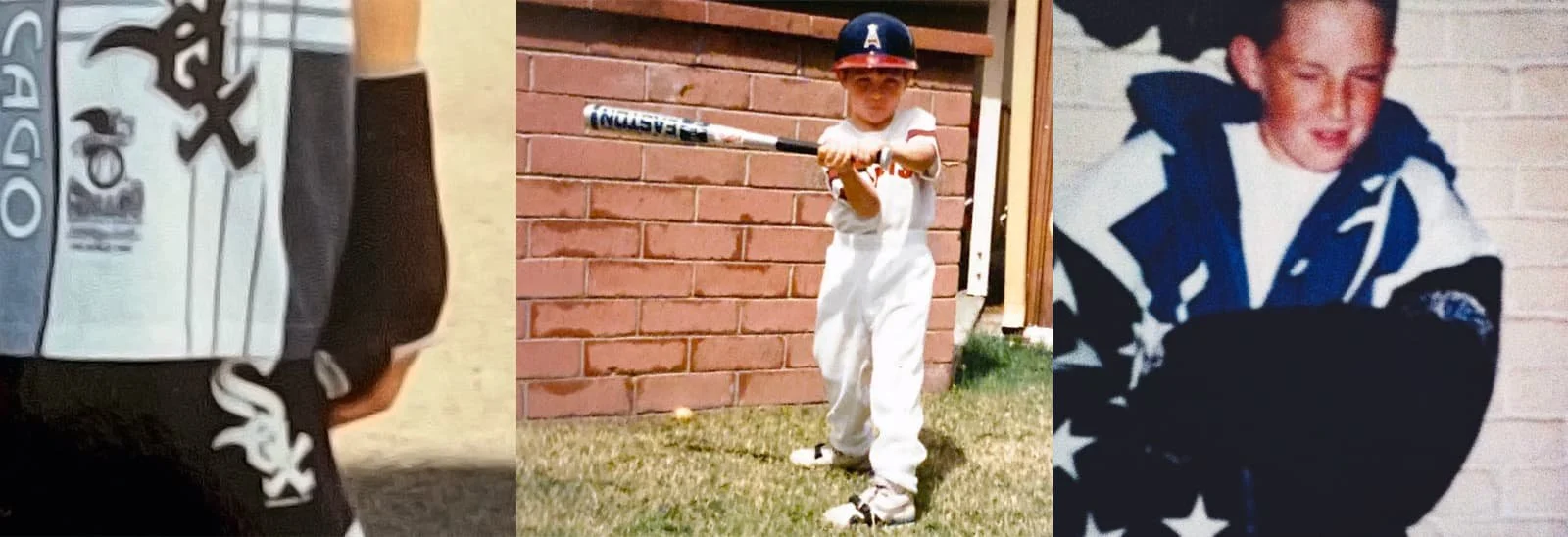
But in 1994, something happened that I didn't understand at the time. Something that would eventually shape the next thirty years of my life.
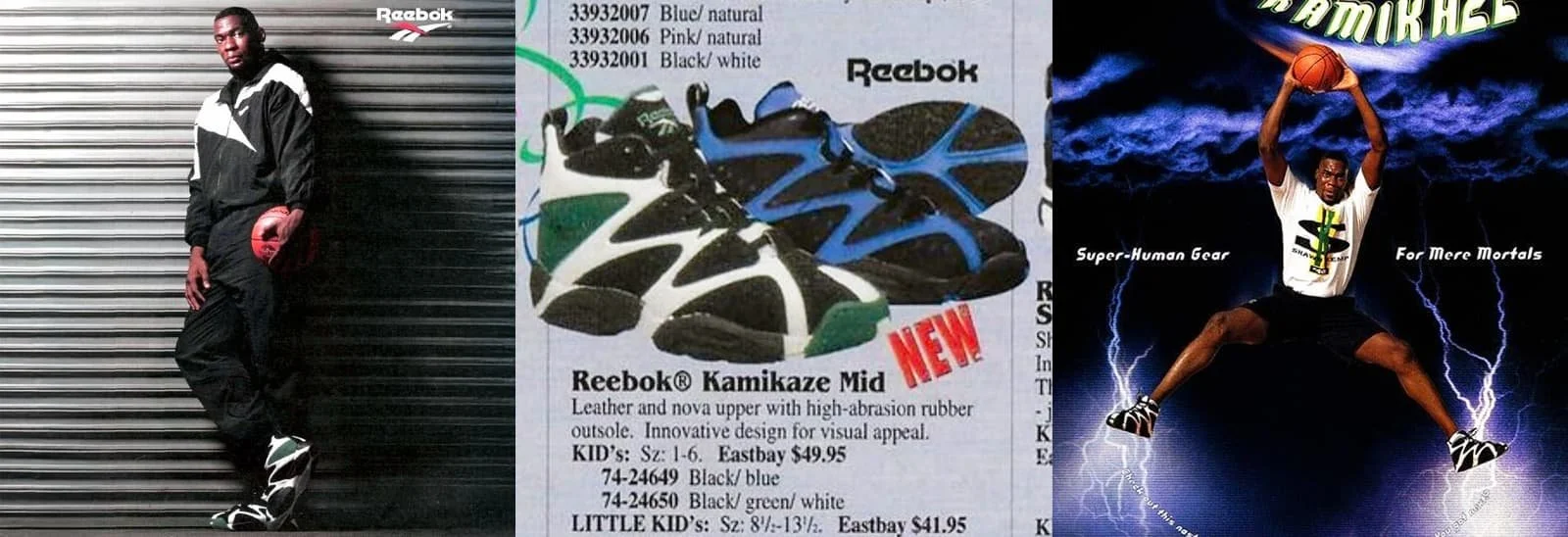
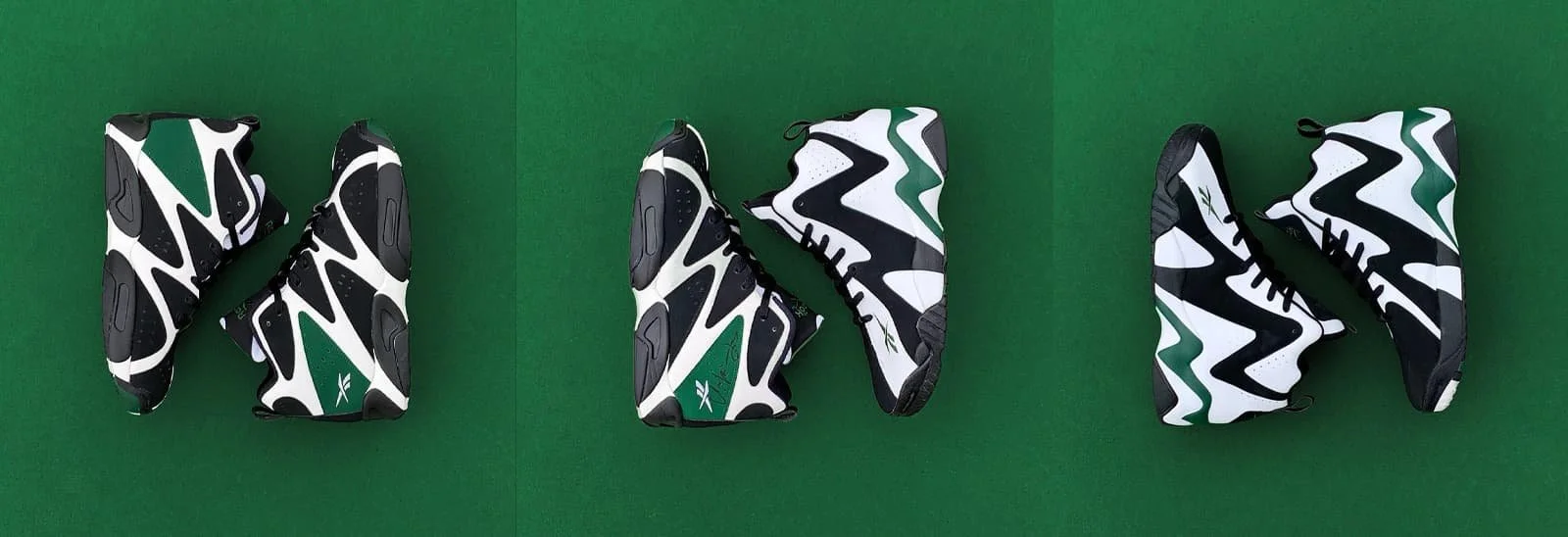
Seattle Supersonics star Shawn Kemp stepped onto the court wearing the Reebok Kamikaze. The moment I saw that shoe, the bold black and white, the Sonic green hit on the ankle, something inside me lit up. It felt electric. I didn't know sneakers could make you feel anything. I didn't know they could stay with you for days. For years. But that pair did.
A few months later, in a moment that's still burned into my memory, my friend Josh and I walked to our friend David's apartment to get him for a game of Home Run Derby at our local Little League field. We knocked. We waited. He opened the door, and everything froze.
Right there, on the carpet in front of the TV, sat the Reebok Kamikaze. Not on a screen. Not in Eastbay. Not on Shawn Kemp's feet. Five feet in front of me, real and tangible, was everything I'd been thinking about for months.
It felt like a movie moment where the Holy Grail glows and a choir sings. I kept it cool because we all did in the '90s, but inside, something burst wide open. I knew nothing about the sneaker industry or the world behind it. But I felt something. Something big.
Later that year, David showed up wearing the black, white, and blue colorway, a pair I didn't even know existed, and my obsession grew even deeper. We were poor. On welfare. Expensive shoes weren't for kids like me. I didn't ask. I didn't even consider asking. But the Kamikaze became my holy grail, the shoe that shaped something in me I couldn't name yet.
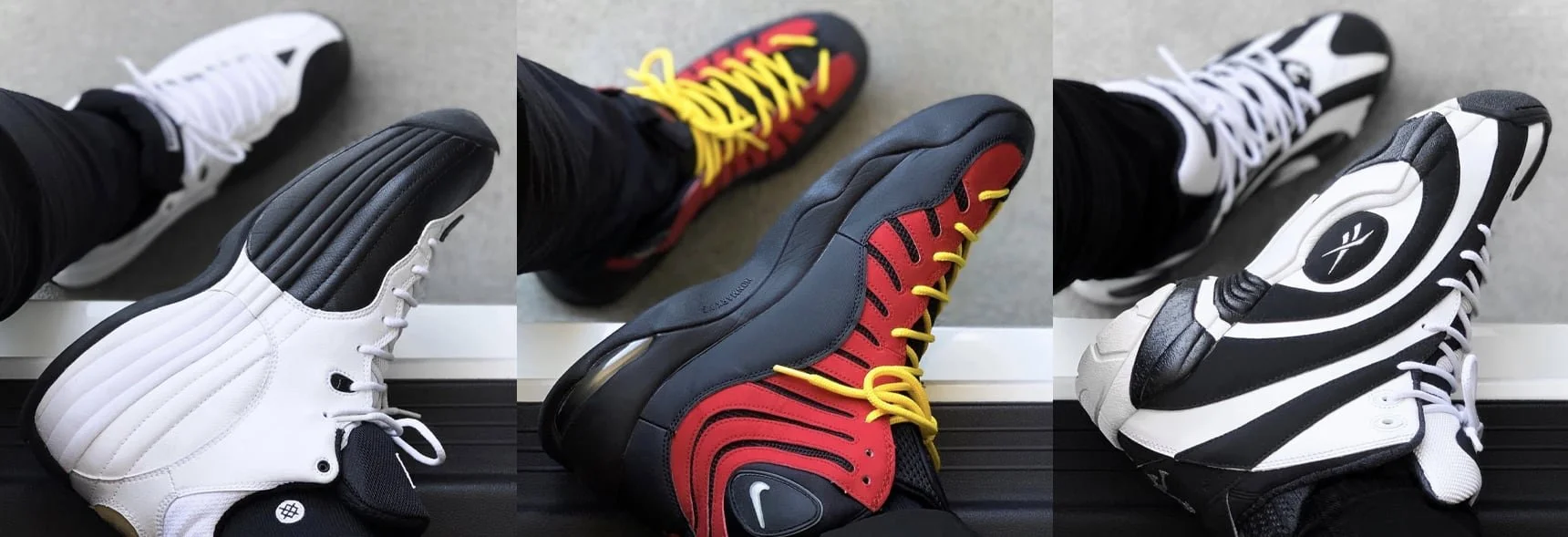
From there, my love for sneakers and athletes exploded. Jordan. Penny. Griffey. Rodman. Bonds. Rice. Kidd. On and on. In 1995, after seeing a kid at our local Single-A baseball field wearing a pair of Nike Zoom '95s, that shoe became my next obsession. But again, too expensive. Then I learned there was a cheaper takedown version called the Air Thrill Flight. I finally worked up the courage to ask for them. My grandma said yes, drove me to Sports Authority, and bought them. I wore them into the ground.

My teenage years were a timeline of sneakers. The Jumpman Team One. The Reebok Answer. The Nike Air Bacon. The “Mushroom” Air Force 1. The “Syracuse” Dunk High. The Total Air Foamposite Max.
Every pair felt like a tiny burst of joy in a life that didn’t have much of it.
I studied Eastbay catalogs the way other kids studied textbooks. I memorized release dates. Colorways. Player endorsements. I knew which shoes I wanted long before I knew whether I could actually have them.
99.9% of the time, I couldn’t.
So I learned to admire them from a distance.
A new pair in a magazine.
A kid wearing them at school.
Someone walking through the mall.
Sometimes that was enough.
When I was lucky enough to get a pair, I wore them until they couldn’t be worn anymore. The creases didn’t matter. The scuffs didn’t matter. They weren’t just shoes to me. They were reminders that there was a bigger world out there than the one I saw every day.
For a little while, they made me feel connected to it.
Everything shifted when I reached the end of my teenage years. At seventeen, I was shot at point-blank range. Something I wasn't prepared for in any way. At that age, you don't truly process something like that. You just survive it and keep moving because you don't have another option.
Two years later, my dad died suddenly. Whatever foundation I had left cracked again. Those years felt like a blur of fear, grief, and trying to stay upright when nothing felt steady. I didn't know what direction my life was supposed to take, only that staying where I was didn't feel possible anymore.
After high school, I left my hometown and moved to Los Angeles for college. It wasn't a bold, decisive plan. It was me trying to find room to breathe and rebuild my life after everything that had happened. I brought the two or three pairs of sneakers I had with me because they were the only familiar thing in a world that suddenly felt unfamiliar. I didn't know anyone in LA yet. I didn't have much beyond classes and a desire to start over. But being there felt like stepping toward the version of myself I was trying to become. That move is what eventually led me to Undefeated.
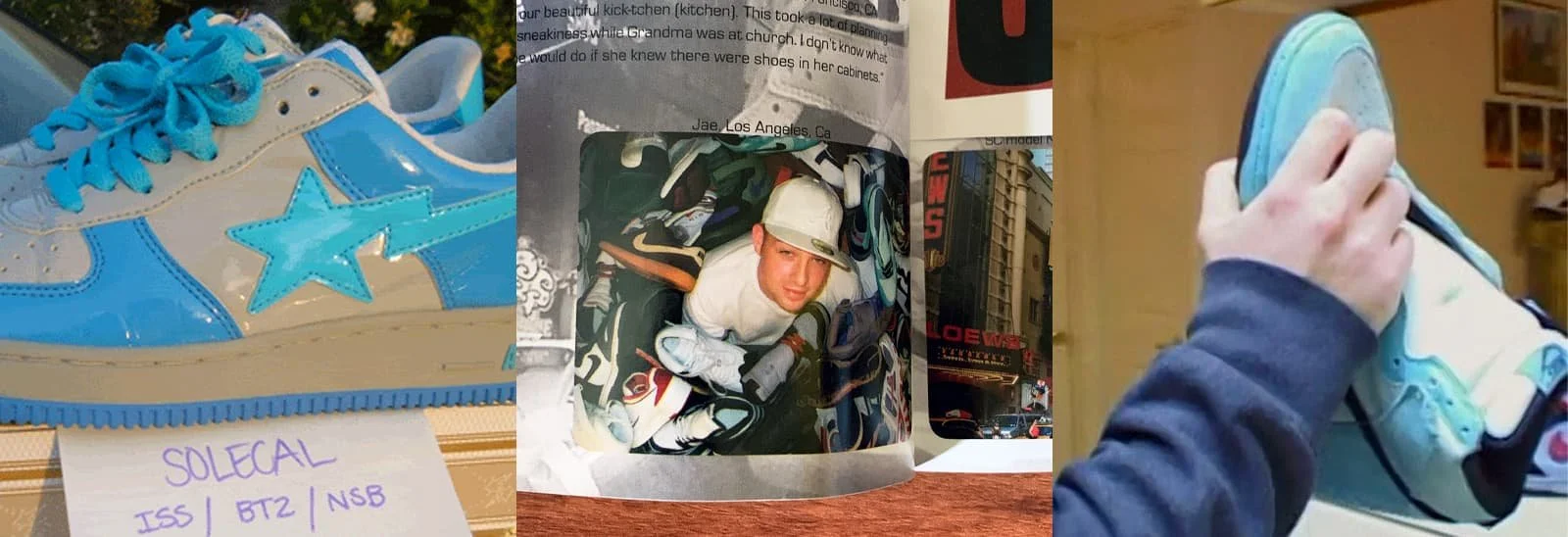
A couple of years before moving to LA, I joined ISS forums. It was how I learned there were other sneaker lovers. And when I moved to LA, I used ISS to turn online friends into real-life friends and to start buying shoes, mostly from UNDEFEATED. I started buying Dunks like my life depended on it: Iron, Cali, Sea Crystal, Carhartt, Shimizu, T-19, Ostrich, Celtic, Orca. Safari. Every shoe felt like a story, a moment, a world I wanted to be part of.
And then came one of the most important days of my life.
I rode the city bus from Ocean Park and 31st in Santa Monica to Undefeated on Main Street. That's where I met Alex Bruzzi, someone whose kindness changed the entire direction of my life. It was a hot summer day, and after meeting me, after I'd walked and rode the bus to get there, he reached behind the counter and offered me an ice-cold Gatorade. Such a small thing to him. But to a kid like me, who rarely felt seen or welcomed anywhere, it meant everything.
That moment turned into hours on the metal bench outside Undefeated, talking sneakers with Alex, "Yo," and anyone who came through. For the first time in my life, I felt like I had people. A community. A place where I wasn't an outsider.
I started getting invited to launches and parties I didn't know existed. And then the night came that changed everything for me: the Mr. Cartoon x Nike Air Force 1 Low event at Undefeated on La Brea. Alex introduced me to Cartoon, had him sign some stuff, and even introduced me to Cartoon's dad. I ended up passing out mochi with him, something I still smile about all these years later.
It was the first time I didn't feel like I was watching from the outside. I felt like I was finally part of it.
Not long after that, another unexpected moment arrived. Jason Gaines, who worked at Conveyor inside Fred Segal, invited me to a launch party at the Nike Blue House in Venice for the Nike Considered line. It was the first real "industry" event I had ever been to: valet parking, gift bags, people from the forums, collectors, designers. It was the first time I ever stood in a space like that and thought, "Maybe I actually belong here."
And not long after, as life would have it, I was pulled from Los Angeles. I moved to Bozeman, Montana, from a city where I finally felt connected to a world I loved, into a small town where I stuck out without trying. Dirt roads, quiet streets, and a community where no one dressed like me. SBs. New Era fitteds. Baggy denim. All of it felt out of place. My sneakers became the one thing that felt familiar, a link back to the life and identity I was still shaping. They were my connection to home when nothing around me looked like home.

When I finally returned to California, the weight of that connection was literal. Every pair I owned was packed into the car, stacked to the roof. We broke down in a snowstorm at the base of the Rockies because of it. I had to leave the shoes behind temporarily and have friends ship them to me piece by piece once I got home. It sounds dramatic now, but at the time it felt symbolic: this thing I had carried with me for so long was still going to find its way back. And so was I.
At this time, Twitter was taking off, and I talked about sneakers on it the same way I talked about them in person.
Then came the message that altered my entire future.
Nick Engvall, one of the most respected figures in sneaker media, messaged me. He said he liked how I carried myself and how much I knew. He said he was temporarily taking over Complex Sneakers from Russ Bengtson and asked if I wanted to write for the site. I had only recently started writing professionally for Modern Notoriety, but I didn’t hesitate. I said yes.
I helped Nick and Brandon Edler start and run the Complex Sneakers Instagram.
I wrote news articles.
Interviewed athletes.
Covered events.
Found myself in spaces the younger version of me would've thought were imaginary.
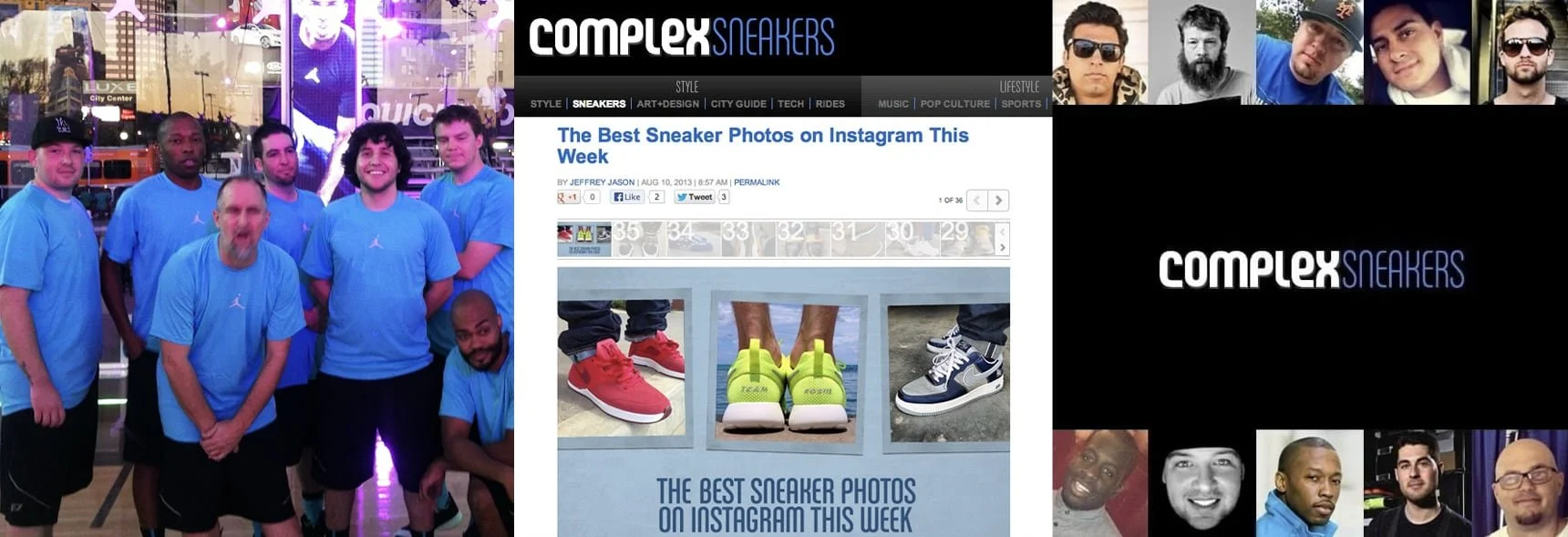
My first in-person interview for Complex was with Melody Ehsani at her Fairfax store during the release party for her first Reebok collaboration. I was nervous. Packed room. Loud energy. But once we started talking, the interview fell into place. Seeing my first byline go live afterward, and being recognized at events as "the guy from Complex," made everything feel real. It felt like an arrival.
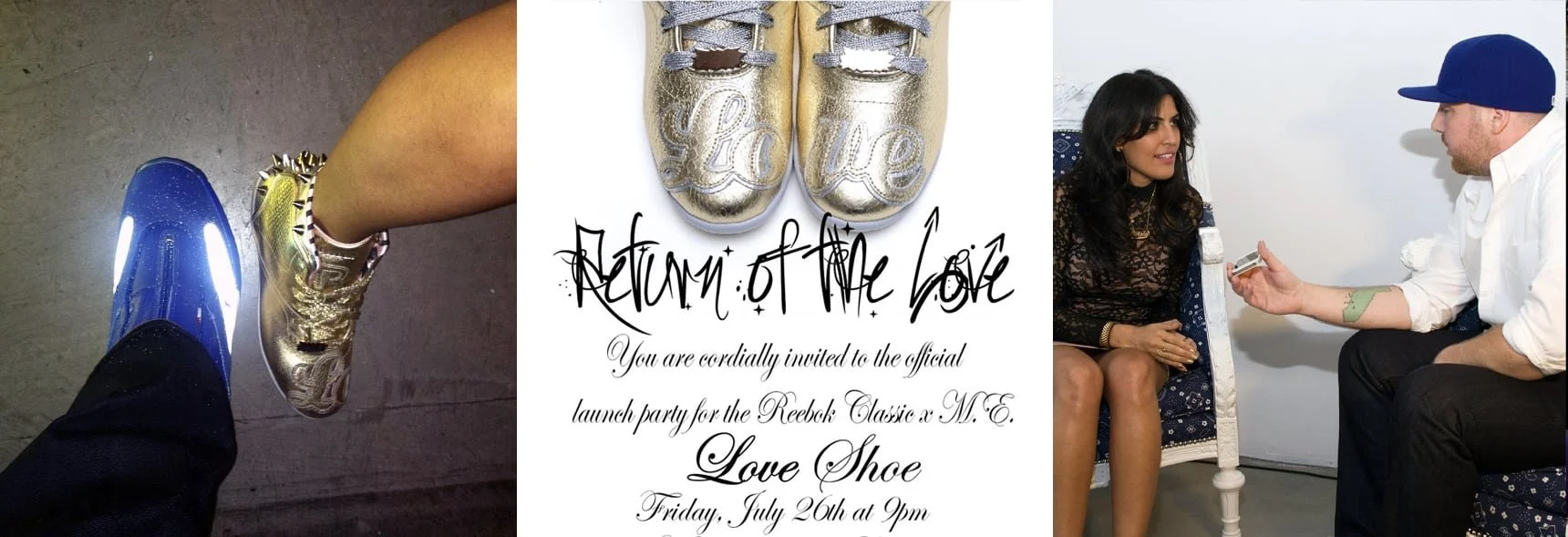
And it was at that Melody Ehsani event where I met Jazerai Allen-Lord, who at the time was the Director of Operations at KicksOnFire.
That connection eventually led me to write for KOF.
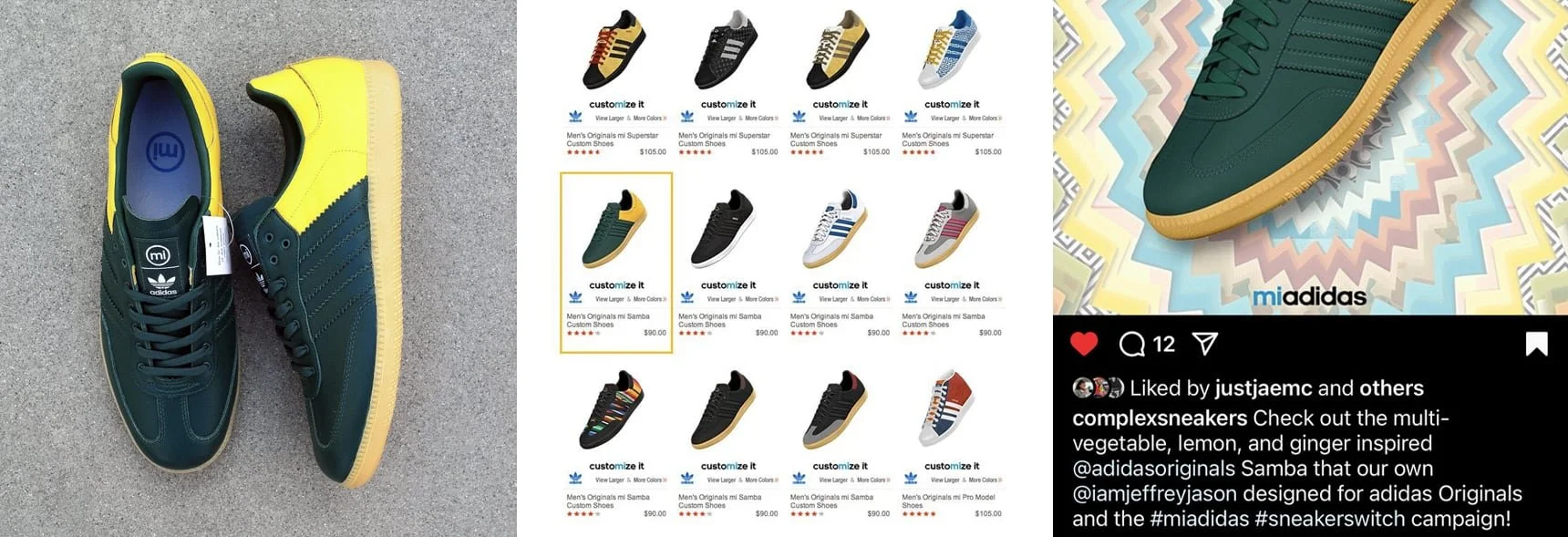
Toward the end of my time at Complex, before joining KOF, another unexpected opportunity arrived. adidas invited me to participate in an influencer design program and create my own version of the adidas Samba.
I called it the “Lemon Ginger Blast,” named after Lou Corona’s famous raw juice.
Seeing a shoe I designed move from an idea to a finished product felt surreal. adidas produced the shoe and made it available through the miadidas program, turning something that had started in my imagination into something real.
For someone who had spent years staring at sneakers in magazines, catalogs, and store windows, having a design of my own appear on adidas’ website felt almost impossible to believe.
Now I was settling into sneaker media, getting press releases and being seeded shoes, when the announcement hit me straight in the heart: Reebok was re-releasing the Kamikaze.
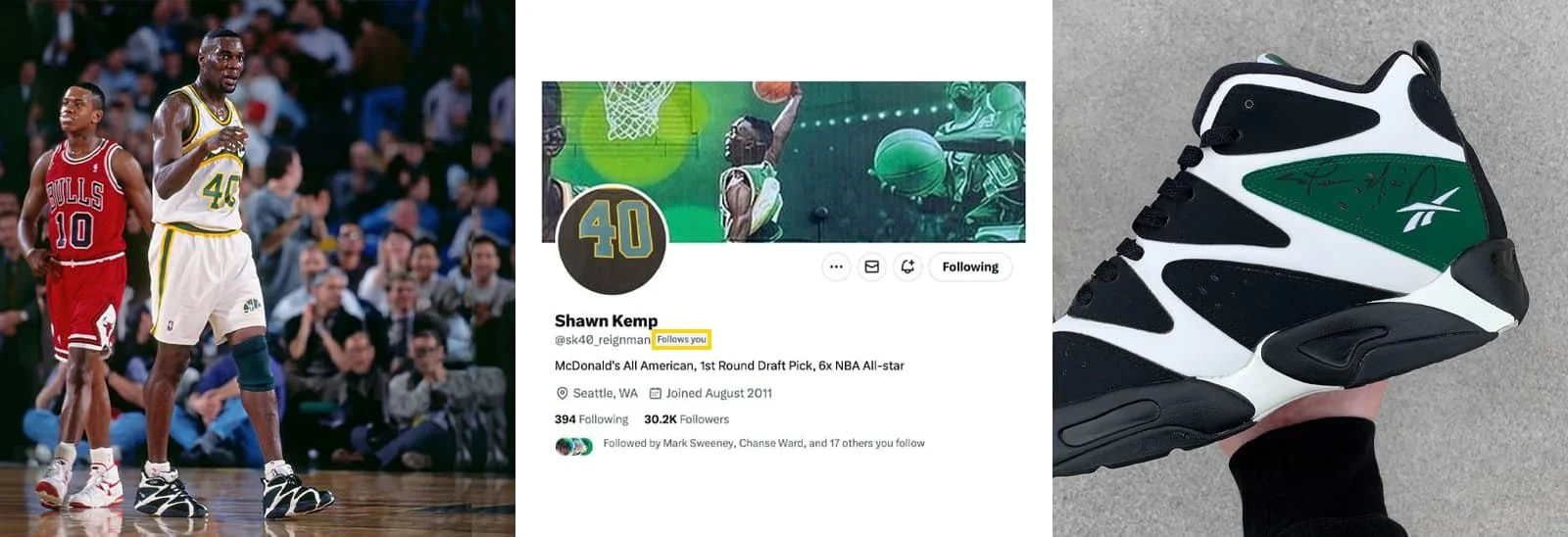
After almost 20 years, the shoe that started everything for me, the shoe that took me back to that doorway at David’s house, was coming back. I bought them immediately. Holding them again felt like shaking hands with my younger self.
I must have stared at them for an hour.
But the moment that truly completed the circle came later.
One day, I was scrolling through Twitter notifications when I saw it: Shawn Kemp followed me.
The details of our exchange blur now, but the feeling doesn’t. It hit me with the same shock I felt as a kid staring at that Kamikaze on my friend’s carpet. It was a full-circle moment I never expected to touch in my lifetime.
And then… we eventually exchanged messages.
Eight-year-old me would have fainted.
The final moment, the one I still feel in my chest, was when I got my first pair of Kamikazes signed by Shawn Kemp himself. That pair is one of the most meaningful things I could ever own. A reminder of what a spark can become. How far a feeling can carry you. How a small moment in a doorway can lead to an entire life.
Since then, sneakers have taken me across the country, to global launches, brand headquarters, behind-the-scenes moments with athletes and designers, and projects I never could've imagined when I was that kid staring at a pair of Kamikazes on the carpet. I've written and managed social channels for Nice Kicks, Kicks On Fire, Shoe Palace, Sole Retriever, Modern Notoriety, and more. I've been seeded hundreds of pairs of shoes, covered major releases, and worked on projects that reached millions. I've stood in rooms that younger me would've never believed he belonged in.
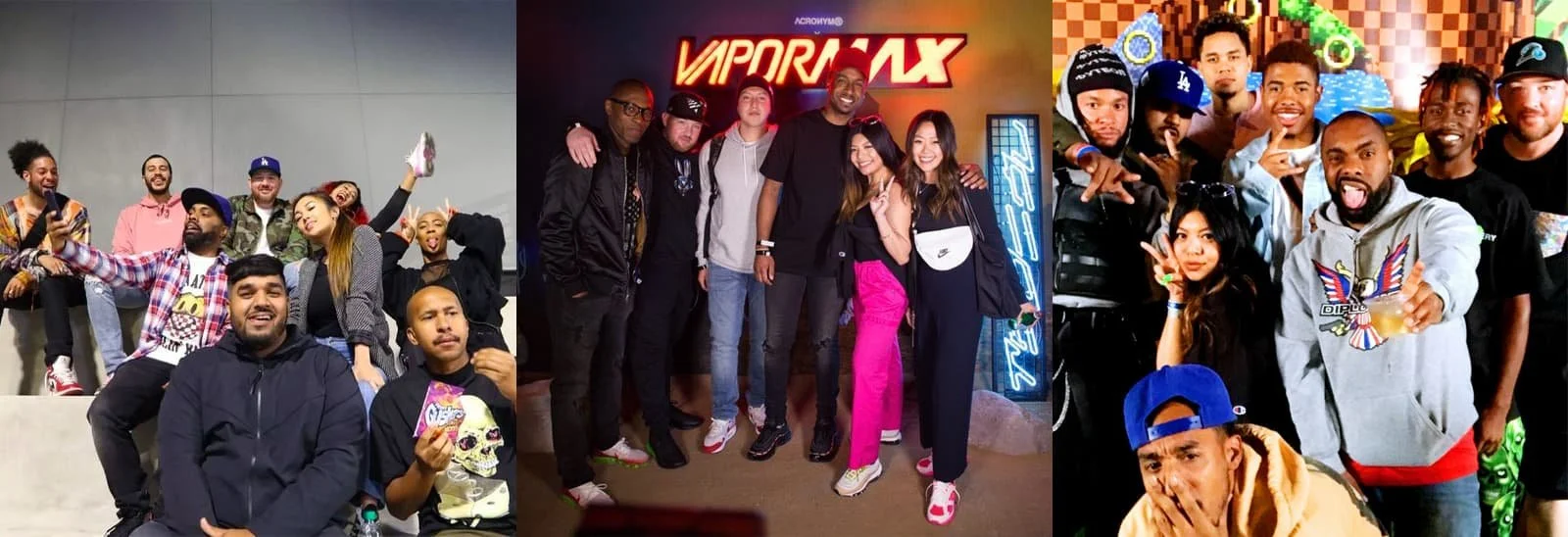
And all of it, every bit of it, traces back to one moment in 1995.
A doorway.
A TV.
A friend's apartment.
And a pair of Reebok Kamikazes sitting on the floor like destiny.
I think about that moment often. How small it was. How huge it became. How strange and beautiful it is that a shoe can become a compass. Everything I’ve been able to do, every person I’ve met, and every opportunity I’ve touched all come back to that spark the Kamikaze gave me. A spark I didn't ask for. A spark I didn't understand. A spark that somehow shaped my future. A spark tied to a love I had, a love I lost for a while, a love I miss, and a love I'm slowly finding my way back to.
All these years later, I'm still grateful.
Grateful for the shoe.
Grateful for the journey.
Grateful that I never let go of the things that made me feel alive when I was a kid.
And grateful that the story's still being written.
WHAT CAME NEXT
The impossible started happening.
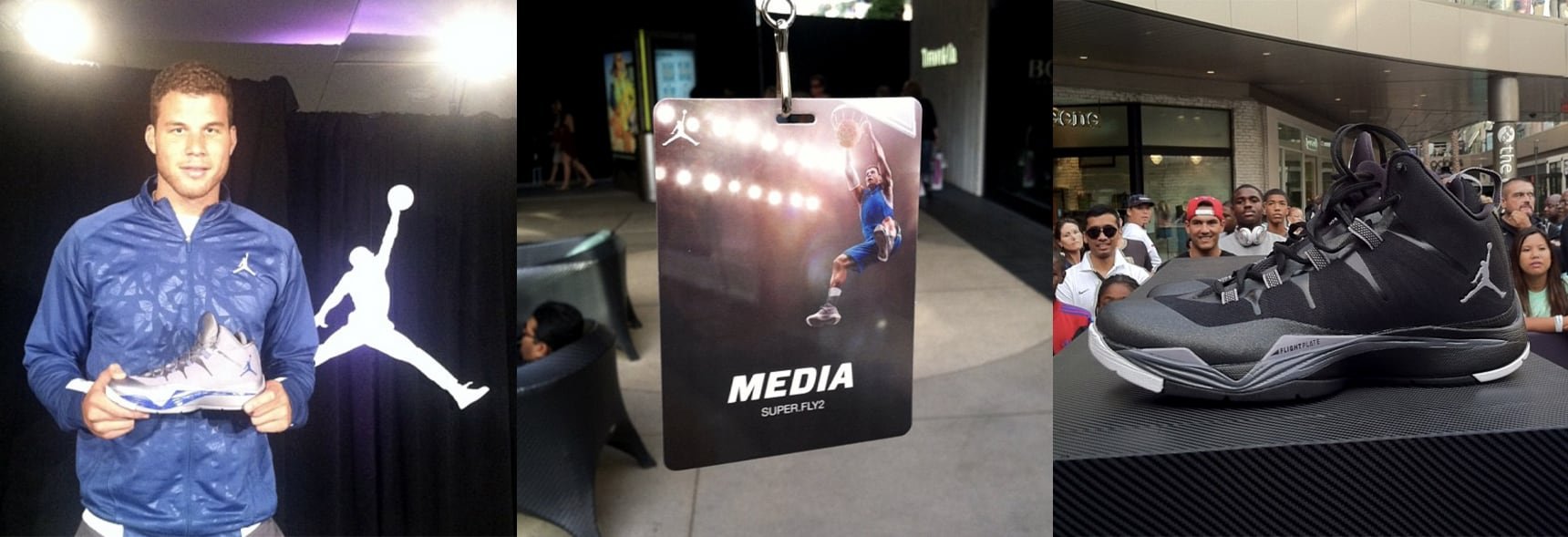
One of the first moments that made everything feel real happened at Santa Monica Place.
Years earlier, I had worked nearby at Gap while attending college. I spent countless days walking through that area, trying to figure out who I was and what kind of future I wanted. Then one day I found myself walking back into Santa Monica Place with a media credential around my neck for the launch of Blake Griffin’s Jordan Super.Fly2.
I wasn’t there as a customer.
I wasn’t there as a college student.
I was there as media.
Later that day, I interviewed Blake Griffin.
I remember looking around and thinking about how strange life could be. The same place that had once been part of my everyday routine had become the setting for one of the biggest moments of my young career.
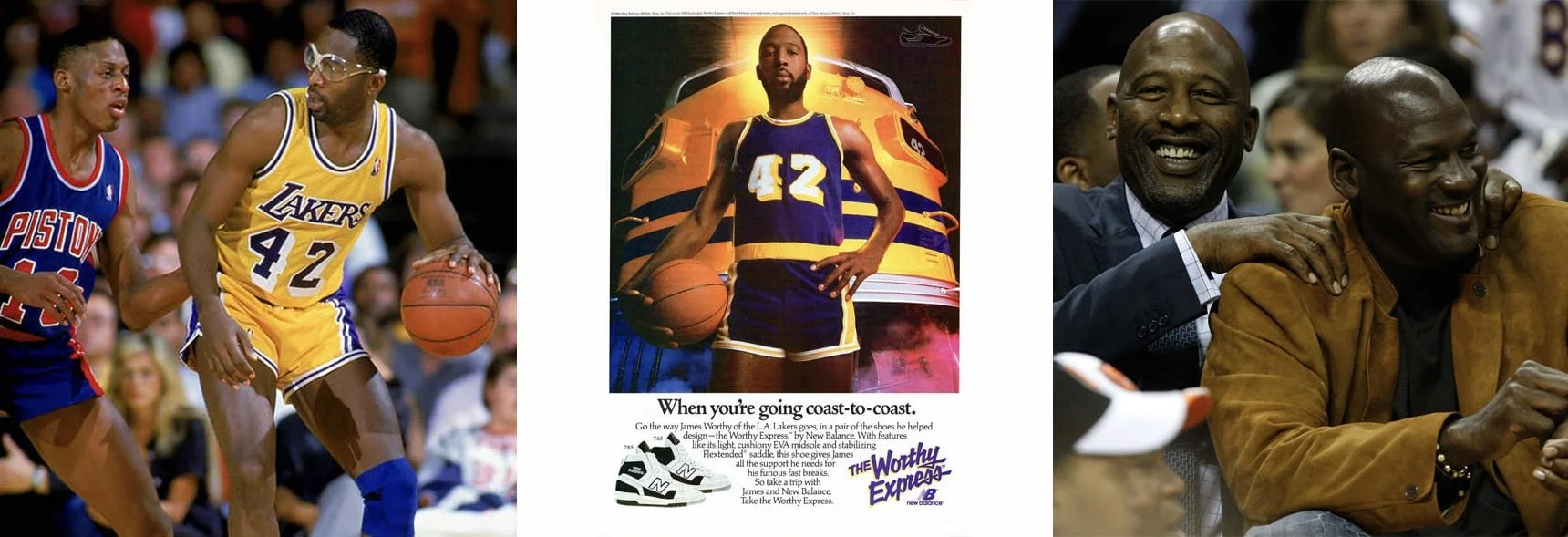
Years later, another moment arrived when I interviewed James Worthy.
Growing up in Southern California, the Showtime Lakers felt larger than life. They weren’t just a basketball team. They were part of the backdrop of childhood. James Worthy was one of those names I had heard for as long as I could remember.
And now I was asking questions about the retro of his classic Converse sneaker..
The entire conversation felt surreal.
Not because he was a celebrity.
Because moments like that still felt impossible to the kid I used to be.
Then came New York City.
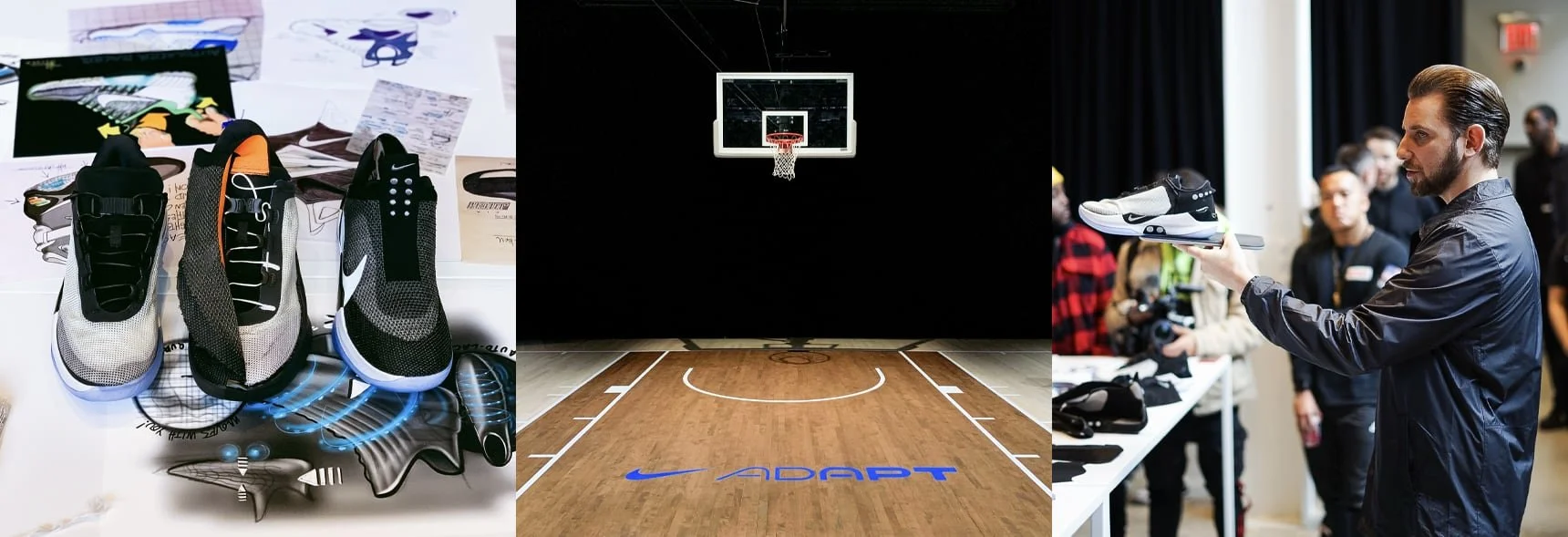
Nike invited me to the global launch of the Nike Adapt BB, the most advanced basketball shoe the company had ever created. Sitting inside Nike’s New York headquarters, surrounded by media from around the world, I listened as the designers walked us through the project, showing sketches, prototypes, and samples while explaining how years of work had led to a shoe that could electronically adjust its fit.
Jayson Tatum was there.
The designers were there.
The people responsible for bringing the shoe to life stood in front of us answering questions and sharing details that most people would never see.
I had my Sony a7 on and ready.
My iPhone XS Max in my hand.
Press credentials around my neck.
And for a moment, I couldn’t document anything.
I just sat there, looking around the room slowly, the way you do when you’re trying to memorize something before it disappears.
A kid who grew up on food stamps.
A kid who couldn’t afford the shoes he loved.
A kid who once stood frozen in a doorway in his friend’s apartment, staring at a pair of Reebok Kamikazes on the carpet, trying to keep his face still while everything inside him came apart.
That kid was now sitting in a room where Nike was showing the world what came next.
Those moments aren’t the whole story, though.
There were flights, launches, interviews, deadlines, product seeding, road trips, photos, articles, social campaigns, and opportunities I never could have imagined when I was growing up in San Bernardino, California.
But when I think about the last fourteen years, those aren’t the things I remember first.
I remember the moments that made me stop and look around.
The moments that reminded me where I came from.
The moments that made me realize how far that spark from a pair of Reebok Kamikazes had carried me.